

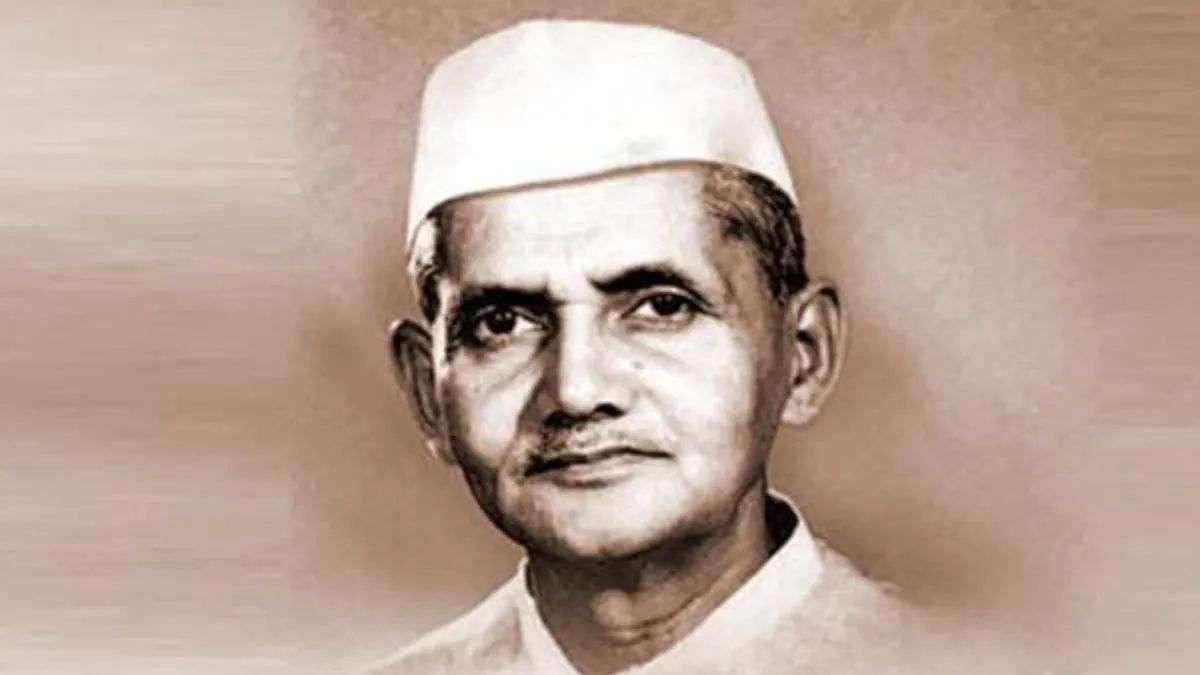
Today is the death anniversary of former Prime Minister Lal Bahadur Shastri, who agitated the country with the slogan ‘Jai Jawan Jai Kisan’. He died under mysterious circumstances on the night of 11 January 1966 after signing the agreement with Pakistan President Ayub Khan in Tashkent, Russia. This night of 11th January is considered to be the most mysterious night in Indian history.
Why did Lal Bahadur Shastri reach Tashkent?
Actually, there was a fierce war between India and Pakistan in 1965. After this, there was a ceasefire between the two countries but the tension on the border was at its peak. India had captured many important parts of Pakistan including the strategically important Haji Pir Pass. The then Prime Minister Lal Bahadur Shastri had united the entire country during the time of crisis by giving the slogan of Jai Jawan Jai Kisan. He was a peace-loving leader and wanted both the countries to focus on development instead of spending money on war.
Soviet Union mediated
The Soviet Union intervened in this matter and invited India and Pakistan to come to Tashkent to resolve their mutual dispute. Soviet Union was a trusted friend of India, hence Shastri ji had reached Tashkent for the agreement. In the agreement, both countries agreed on many points. One point in this was that the country’s forces would return to their positions before August 5, 1965. The most difficult decision for Lal Bahadur Shastri as Prime Minister was to return Haji Pir Pass to Pakistan. Because the Indian Army had won this pass very bravely. This pass had also become very important strategically for India. But due to international pressure and long-term peace, he signed this agreement.
Shastri ji was busy the whole day
Before his death at midnight, Shastri ji had a very busy schedule throughout the day. On December 10, at 11 am, the last round of talks started between Shastri ji and Pakistan President Ayub Khan. Soviet Union Prime Minister Alexei Kosygin was mediating this conversation. The historic Tashkent Agreement was signed at 4 pm. Shastri ji described this peace agreement as a new beginning in India-Pakistan relations.
Shastri ji looked happy even in the feast
A grand banquet was given by the Soviet Union between 6 pm and 8 pm. He looked happy even in this feast. Shastri was accommodated in a villa while the rest of the staff stayed in a nearby hotel. They reached the villa around 8.30 pm with the feast. He was accompanied by his press secretary Kuldeep Nayyar and other staff.
He took light meal at 9.00 pm. The meal for him was prepared by his personal chef Ram Nath (according to some reports the Russian chef also helped that night).
At 10:00 pm, Shastri ji dialed Delhi and talked to his daughter Kusum. He asked what is the reaction to the agreement in India? Kusum told that some people in the country are not happy, because India had promised to return the conquered land (Haji Pir Pass). Shastri ji tried to talk to his wife Lalita Shastri, but could not talk to Lalita ji.
Was Lal Bahadur Shastri tensed about the agreement?
At 11:00 pm, Shastri ji started pacing the room and was telling his secretaries that “a lot of answers will have to be given in India tomorrow” regarding this agreement. At 12:30 in the night, Shastri ji asked his staff for water and sent them to sleep.
At 01:20 in the night, suddenly Shastri ji came to the door of his room and, coughing, moved towards his staff room. He said the words with difficulty—”Where is Doctor Sahib?” At 01:25 pm Dr. R.N. Chug reached his room. By then Shastri ji was lying on the bed and he was having severe difficulty in breathing.
What did Kuldeep Nayyar tell in his book?
Senior journalist Kuldeep Nayyar had gone to Tashkent as the press secretary of Lal Bahadur Shastri. He described that night in his autobiography BEYOND THE LINES and many other writings. According to Nayyar, Shastri ji was under great stress that night because he had received the news that the Tashkent Agreement was being criticized in the country. According to Nair, when he reached Shastri ji’s room, a thermos was lying upside down near his body. There was no doctor or attendant present in the room. According to the official documents of the Soviet Union and Indian Government, Shastri ji died due to Myocardial Infarction.
Latest India News
 Follow Us On Google News
 Follow Us On WhatsApp

Leave a Comment