

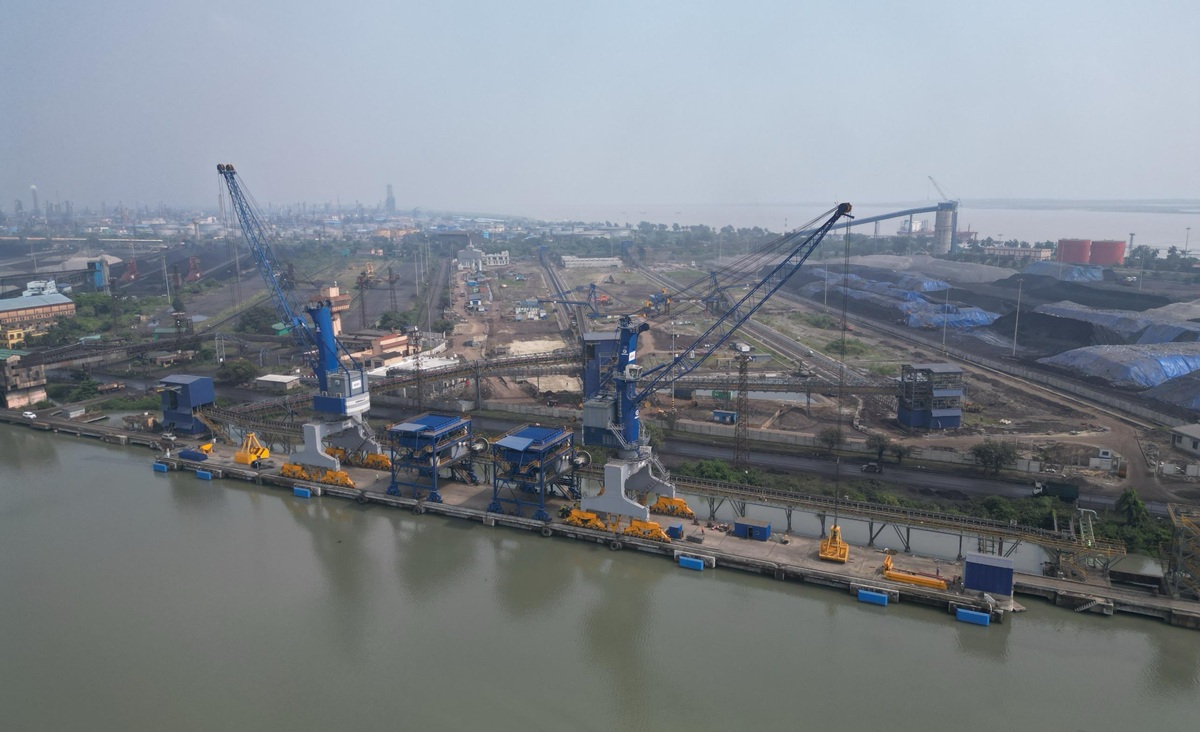
Ahmedabad: Prime Minister Narendra Modi today formally dedicated to the nation the APSEZ (Adani Ports and Special Economic Zone Limited) Haldia Bulk Terminal (HBT). This dry bulk cargo with an annual capacity of 4 MMTPA (million metric tons per annum) is located on the Hooghly River. Equipped with fully automated bulk facility and also connected to Direct Rail. This is a significant infrastructural improvement for the movement of bulk cargo through India’s Eastern Sea Corridor.
What did the CEO of APSEZ say?
Ashwani Gupta, Whole-time Director and CEO, APSEZ, said – “Haldia Bulk Terminal is a next generation facility that enables full mechanization and direct rail discharge at Hooghly. This terminal sets a new benchmark for efficiency on the eastern seaboard of India. By eliminating jetty dumping and reducing cargo losses through advanced automated systems, we are ensuring cleaner, safer and more sustainable operations. “Will play an important role in strengthening industrial supply chains, as well as support Prime Minister Modi’s vision of reducing logistics costs through modern multimodal infrastructure.”
Project Features
Located within the Haldia Dock Complex (HDC) of Shyama Prasad Mukherjee Port, Kolkata, the terminal is developed by HDC Bulk Terminal Limited under a 30-year concession agreement through the ‘Design, Build, Finance, Operate and Transfer’ (DBFOT) model. It has been completed and handed over within its construction period. Its construction started on 14 July 2023 and it is ready to be commissioned today. This demonstrates APSEZ’s execution capability to complete projects on time, every time.
Ready to dry bulk goods
Strategically located on the western bank of the Hooghly River, this terminal is fully equipped to handle imported coal and a variety of dry bulk commodities. About 60% of India’s dry bulk imports come from the east coast, including coal, bauxite and limestone. Haldia thus becomes the most efficient and direct sea gateway for the steel, aluminum and power industries of West Bengal, Odisha and Jharkhand. This increase in capacity will reduce logistics costs and turnaround times for these industries to a great extent.
APSEZ completed these infrastructure works
- Installation of 2,000 T Railway Wagon Loading System (RWLS) and opening of a special railway line of 1.54 km length, which has made it possible to move goods directly from ship to train.
- Repair and renovation of existing jetty.
- Installation of modern conveyor system, due to which work is being done automatically.
- Installation of two stackers-cum-reclaimers for automated stockyard management.
- Adding two more mobile harbor cranes for faster unloading of cargo from ships.
RWLS Features of this terminal
The most important features of this terminal are the Railway Wagon Loading System (RWLS) and special railway lines. Together they help in loading heavy cargo directly from ships into railway wagons and connecting them to the main lines. This reduces the dwell time of ships at the port and also reduces the cost of delivery of raw materials to industrial customers located in the three states.
Haldia Terminal is a direct example of India’s ‘Sagarmala Programme’ and ‘PM Gati Shakti National Master Plan’. In both these plans, priority has been given to multimodal infrastructure of ports to reduce India’s logistics cost. The inauguration of this facility by Prime Minister Modi reflects the national strategic importance of modernizing the eastern seaboard.
What is APSEZ?
Adani Ports and Special Economic Zone Limited (APSEZ) is a part of the globally spread Adani Group. It is a leading ‘Integrated Transport Utility’ provider. It operates from the origination of goods (International freight network) to cargo handling at ports, rail transport, multi-modal logistics parks, warehousing and road transport till final delivery to the customer’s doorstep. It is equipped with comprehensive “shore-to-door” capabilities backed by state-of-the-art digital infrastructure and AI-based optimization. , positioning APSEZ as India’s best integrated logistics solutions provider.
The company operates a comprehensive ecosystem of 15 ports and terminals strategically located on the western, southern and eastern coasts of India. In addition, it has a diverse fleet of 127 vessels and integrated logistics capabilities—including 12 multi-modal logistics parks, 3.1 million square feet of warehouses, and more than 25,000 trucks running on its own platforms. Thus, the company offers the capacity to handle huge volumes of cargo coming from both coastal areas and hinterland. Currently with a capacity to handle 633 million tonnes of cargo per annum, APSEZ handles about 28% of India’s total port volumes.
Latest India News
 Follow Us On Google News
 Follow Us On WhatsApp

Leave a Comment