

What is the news?
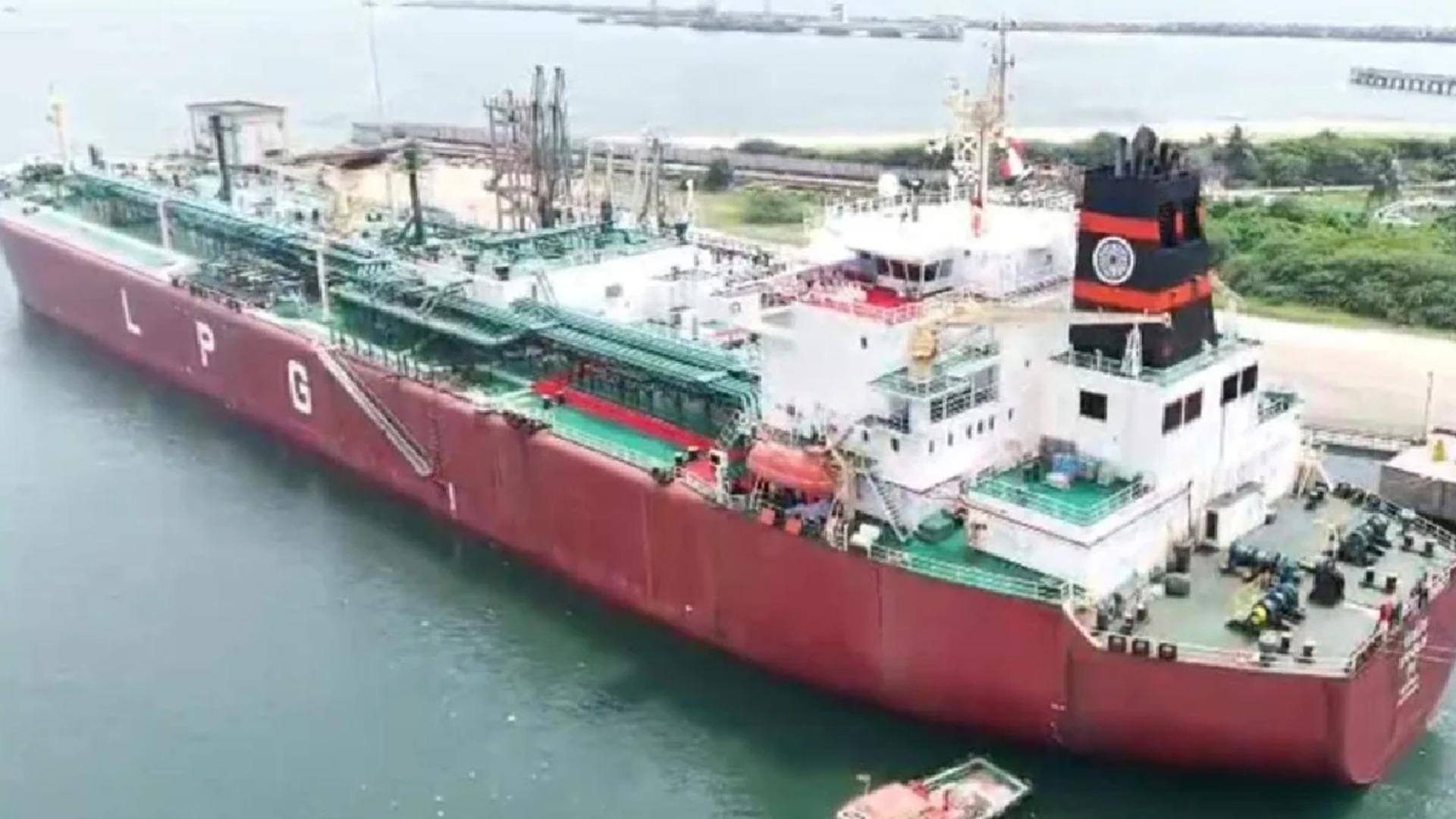
Amid the shortage of LPG cylinders in India amid the US-Israel-Iran war, two tankers loaded with about 92,700 metric tons of Liquefied Petroleum Gas (LPG) have crossed the war-torn Strait of Hormuz and reached Mundra and Vadinar ports in Gujarat. This has provided a significant relief to India’s stressed LPG supply. Among these, a tanker ship ‘Shivalik’ arrived on Monday and ‘Nanda Devi’ arrived on Tuesday morning. Let us know how their arrival will provide relief.
How much gas is present in both the vessels?
According to Rajesh Sinha, Special Secretary, Ministry of Shipping, there are 24 Indian-flagged ships in the Persian Gulf, west of the Strait of Hormuz. Two of these ships (Shivalik and Nanda Devi) departed from there on 13 March and crossed the Strait of Hormuz on 14. He told that there is 46,200 metric tons of LPG gas in ‘Shivalik’ and 46,500 metric tons of LPG gas in ‘Nanda Devi’. Thus, there is a total of 92,700 metric tons of LPG present in both the ships.
How much can be supplied to India from both the tanker ships?
These vessels represent a significant addition to India’s supply chain, equivalent to approximately 65 lakh standard 14.2 kg domestic cylinders used by households across the country. According to experts, this gas will provide limited relief to India’s LPG supply. There are about 33 crore domestic LPG consumers in India and the country’s daily consumption is more than 80,000 tonnes. Such ships can supply a little more than a day.
How will the LPG delivered in ships be distributed?
Deendayal Port Authority (DPA) Chairman Sushil Kumar Singh said that the gas from the ship ‘Nanda Devi’ is being transferred to another ship in the middle of the sea near Vadinar Terminal. After this, half the LPG stock will be sent to Ennore Port and half to Haldia Port in West Bengal. Similarly, 12,000 tonnes of LPG will be sent to Vadinar from the ship ‘Shivalik’ berthed at Mundra Port and the remaining gas will be sent to two different terminals at Dahej Port and Mangalore.
Who operates ‘Shivalik’?
‘Shivalik’ is a large gas carrier vessel (VLGC) operated by Shipping Corporation of India (COI). It was inducted into service in September 2025. Built in South Korea, this tanker is one of the largest tankers of its category, measuring 225 meters in length and 36 meters in width. It is designed to carry liquefied gas in special temperature-controlled tanks. It has the capacity to transport 40,000 to 46,000 tonnes of LPG per trip.
How is ‘Nanda Devi’ operated?
The ‘Nanda Devi’ LPG ship was built in 2001 by Kawasaki Sakide Works of Japan. Currently managed by BW Fleet Management of Norway and operates under Indian flag. It is operated under the protection of the Indian Navy for India’s petroleum needs. Its old name was BW Vision and Dynamic Vision. Its capacity is 46,000-47,000 metric tons. The ship is among the major carriers ensuring vital energy supplies to India.
How will LPG be distributed from ships to Indian homes?
At the port, LPG is stored in liquid state refrigerated at -45 degrees Celsius. It is then transferred via mechanical unloading arms to huge cryogenic storage tanks, where it is slowly heated and pressurized for the journey inland. From here it is sent to different places in India through an extended network of nationwide pipelines like Kandla-Gorakhpur and Paradip-Haldia-Durgapur lines.
How will gas reach areas without pipelines?
In areas without pipelines the gas is transported via BTGPLN rail wagons or high pressure road tankers. These transporters deliver the bulk product to any one of approximately 215 automated bottling plants spread across the country.
How is gas filled in domestic and commercial cylinders?
At these plants, empty cylinders are fed into a high-speed carousel system following strict safety standards set by the Oil Industry Safety Directorate (OISD). In this, after cleaning them, 14.2 kg of gas is filled for domestic use and 19 kg of gas for commercial use. The last leg of the journey is managed by a network of over 25,600 distributors who serve active domestic gas customers.
What is the status of domestic production?
India has also increased domestic LPG production by about 28 percent, increasing production from 11.50 lakh tonnes per month to about 15 lakh tonnes. Officials said this increase could help meet domestic demand for about 15 days if supply disruptions continue. Officials indicated that supplies could return to normal within a few days if Indian ships are allowed to pass through Hormuz.
 Follow Us On Google News
 Follow Us On WhatsApp

Leave a Comment