

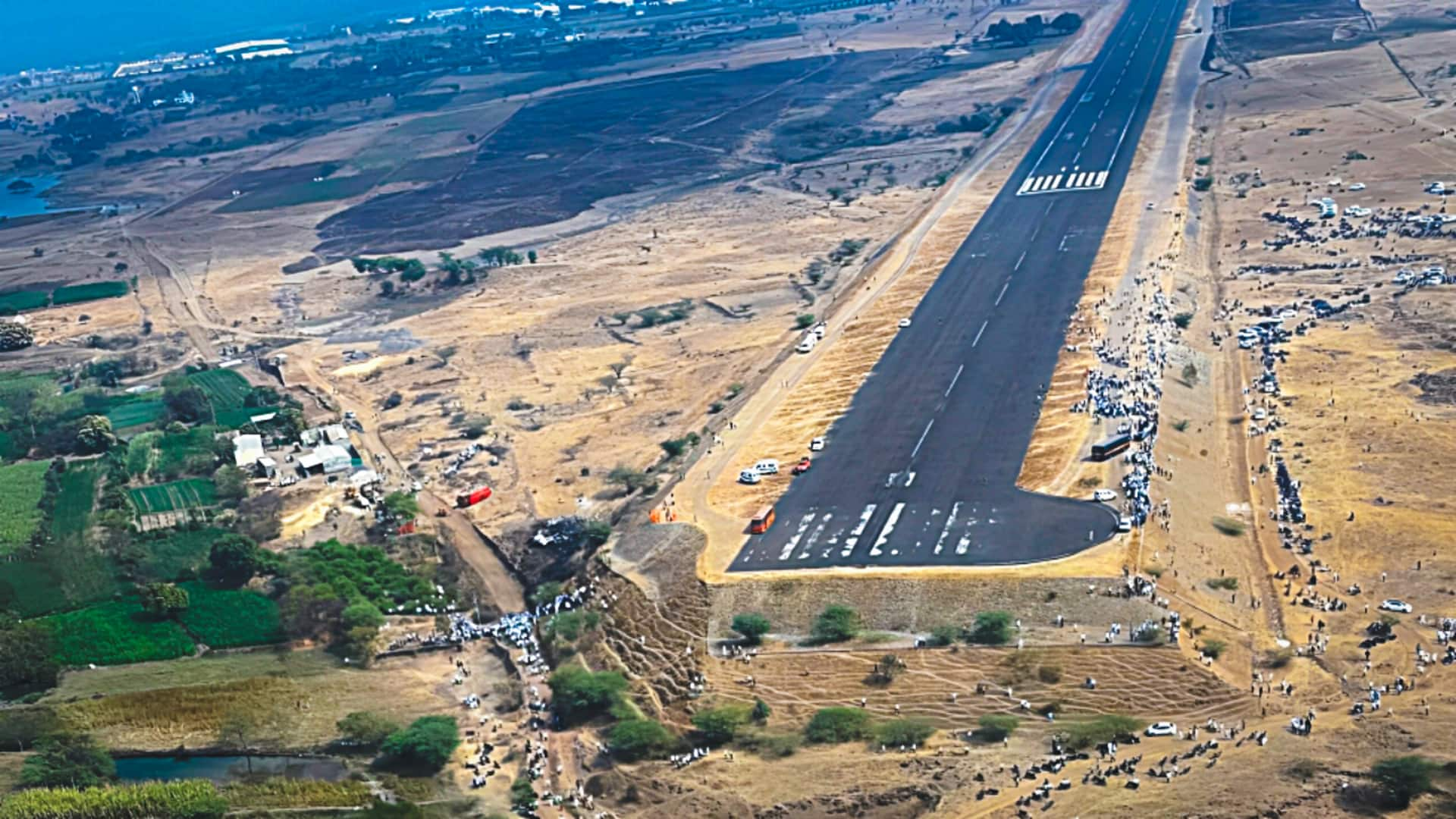
What is the news?
A review of 400 non-air traffic controller (ATC) airstrips across the country has been initiated following the tragic death of Deputy Chief Minister Ajit Pawar in a plane crash in Maharashtra’s Baramati last month. The nationwide review being conducted by the Civil Aviation Ministry aims to create a uniform set of air operating standards. Also, the ministry will also create a common monitoring system involving both the Directorate General of Civil Aviation (DGCA) and state governments.
Fear of accidents on 400 airstrips?
Hindustan Times According to , DGCA teams are reviewing security procedures at ‘A’ category airports. There is no ATC here. These airports are under the supervision of states, private operators or flight training organizations (FTOs) and there are 400 such airstrips in India. Many of these are used by charter operators, political flights, and flying schools, but do not have standardized procedures for airstrip maintenance, rescue services, and coordination of aircraft movements.
These things will be assessed at airstrips
The officials will assess the deficiencies in infrastructure, communication facilities, fire fighting preparedness and coordination mechanism with local authorities of the district as part of the inspection drive of the airstrips. At present, most of these uncontrolled airports are owned by the respective states and are not subject to regular DGCA monitoring, thereby creating a regulatory loophole. The ministry had given guidelines in this regard after the Baramati plane crash on January 28 and has asked for inspection.
Category 4 airports in India
There are 4 categories of airports in India, in which category ‘A’ airports do not have ATC service. Category ‘B’ airports are partially controlled and have limited ATC or AFIS services, such as Chhatrapati Sambhaji Nagar and Jalgaon. Category ‘C’ airports come under the procedural ATC system, where the distance between aircraft is managed without radar, like Pune. Category ‘D’ includes airports like Mumbai-Delhi.
Where are the non-ATC airstrips?
Major uncontrolled airstrips are Baramati, Karad, Chandrapur in Maharashtra, Ujjain, Chhindwara in Madhya Pradesh, Bhagalpur, Begusarai in Bihar, Alwar in Rajasthan, Sultanpur and Saifai in Uttar Pradesh, Hassan in Karnataka. Politicians and business jets land at all these airports.
The system will be developed in coordination with the state
The report quoted senior aviation officials as saying that the existing guidelines for such airstrips do not fall under the jurisdiction of the DGCA. Therefore, the regulator, in coordination with the states, is creating a system through which the status and safety standards of these airports are reported to the Civil Aviation Authority. The inspection involves officials from the Flight Safety Department (FSD), Airworthiness Directorate and Operations Directorate.
infrastructure is cheap
Mark Martin, founder of aviation advisory firm Martin Consultancy, points out that even remote or unpaved airstrips should have essential facilities such as windsocks, basic weather monitoring, CCTV coverage and regular inspections. He said monthly security checks by state authorities and daily online publication of weather data would significantly improve surveillance at non-ATC airports. He also said that these measures will not cost the state government more than Rs 2 lakh per strip.
 Follow Us On Google News
 Follow Us On WhatsApp

Leave a Comment