

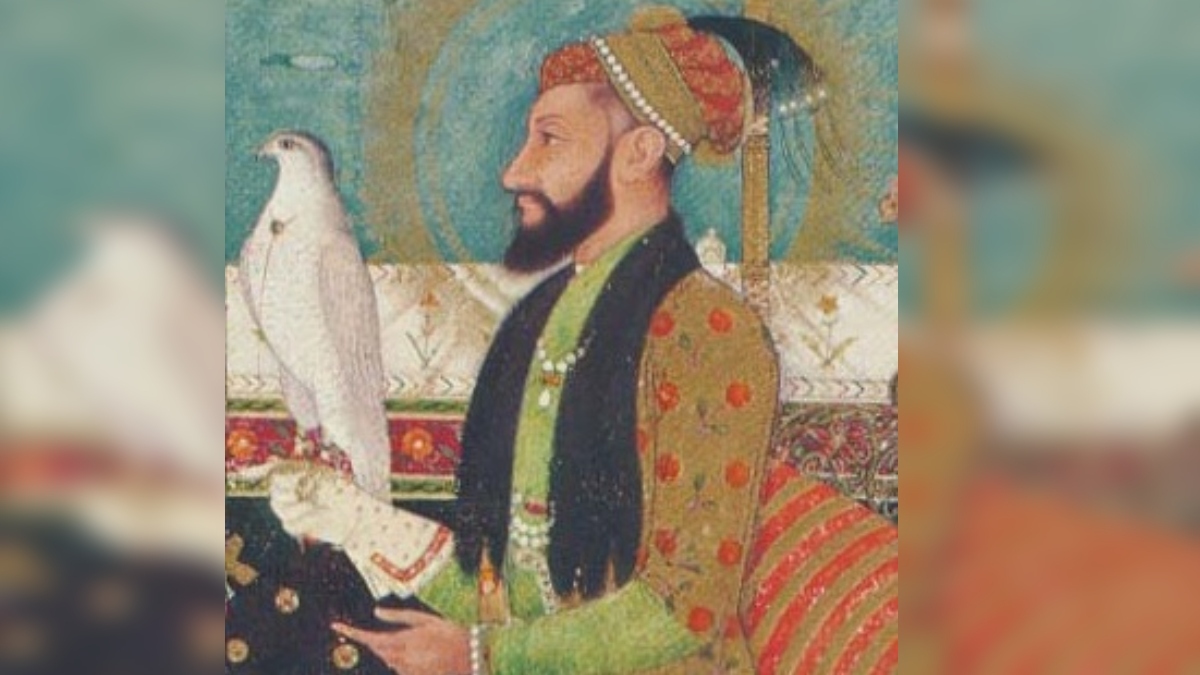
Aurangzeb was the sixth ruler of the Mughal dynasty who ruled from 1658 to 1707. During his reign, Aurangzeb did many such things due to which he had to face opposition in different areas of India. Aurangzeb easily captured many areas but he faced the toughest competition from Deccan. Let us tell you that Aurangzeb lived in North India from 1658 AD to 1681 AD during his 50 years of rule. However, after this he started the Deccan campaign which proved dangerous for him and he was never able to return to North India. Today is 8th February and according to the information, on this date Aurangzeb launched his last military campaign. Let us know how Aurangzeb failed in Deccan.
Why did Aurangzeb leave for Deccan?
Aurangzeb conducted his last military campaign in the Deccan. In the year 1681 he moved towards Deccan from North India. The objective of his campaign was to capture Bijapur and Golconda and completely defeat the Marathas. However, the foundation of the fight for Swarajya laid by Chhatrapati Shivaji Maharaj continued even after his death. The first Chhatrapati Sambhaji continued the rebellion against Aurangzeb. Then even after his death in 1689, this rebellion continued. Aurangzeb captured Bijapur and Golconda but his struggle with the Marathas continued. He was never able to completely defeat the Marathas.
How did Aurangzeb’s campaign fail?
In 1680-81, Aurangzeb moved towards Deccan with his entire army. It was a tradition at that time that his capital also moved along with the king. Aurangzeb moved towards Deccan with an army of more than 5 lakhs, thousands of camels, horses, elephants and artillery. However, despite such a large army, Aurangzeb failed to defeat the Marathas. The Marathas continued the guerrilla or guerrilla war against Aurangzeb’s huge army, due to which his army suffered heavy losses. In such a situation, Aurangzeb’s army kept suffering losses and became tired. Aurangzeb remained stuck in Deccan for about 27 years. In this military campaign, the treasury of the Mughal Empire continued to be emptied and this campaign became like a wound for Aurangzeb and the Mughal Empire. On one hand, the Mughal army was continuously fighting wars in the south, while on the other hand, rebellions by Jats, Sikhs and Rajputs started in North India.
Aurangzeb could never return to Delhi
Aurangzeb’s obsession with conquering the Deccan gradually turned into a big mistake. Due to his campaign, the Mughal Empire began to suffer from lack of resources, the treasury became empty, the morale of the soldiers fell, and the prolonged war had increased the pressure on the administration. The Marathas’ guerrilla tactics, deep knowledge of the Western Ghats and ability to reorganize rapidly after setbacks gradually exhausted Aurangzeb’s army. Eventually Aurangzeb understood that he was trapped in an endless war. In this campaign that lasted for about 27 years, both the Mughal army and the empire became weaker. Aurangzeb’s last military campaign was the siege of Wagingera in 1705, in which he tried to subdue the Berad Nayaks, allies of the Marathas.
Aurangzeb, who set out on the Deccan campaign in 1680-81, started retreating towards Aurangabad in the year 1706. Even during this period, the Marathas continued attacking on the way. However, Aurangzeb ultimately never returned to North India. At the age of 88, Aurangzeb died on 3 March 1707 in Ahmednagar. After this he was buried in Khuldabad in Aurangabad district. With the death of Aurangzeb, the decline of the Mughal Empire started and gradually the power of the Mughals started waning.
Latest India News
 Follow Us On Google News
 Follow Us On WhatsApp

Leave a Comment