

What is the news?
Iran has been badly shaken by the joint attack by America and Israel. Its supreme leader Ayatollah Khamenei has also been killed in this attack. In such a situation, Iran also started retaliatory attacks and announced the closure of the most important oil transport route, the Strait of Hormuz. The entire global market has become worried due to this. Let us know what is the Strait of Hormuz and what will be the effect of its closure.
What is the Strait of Hormuz?
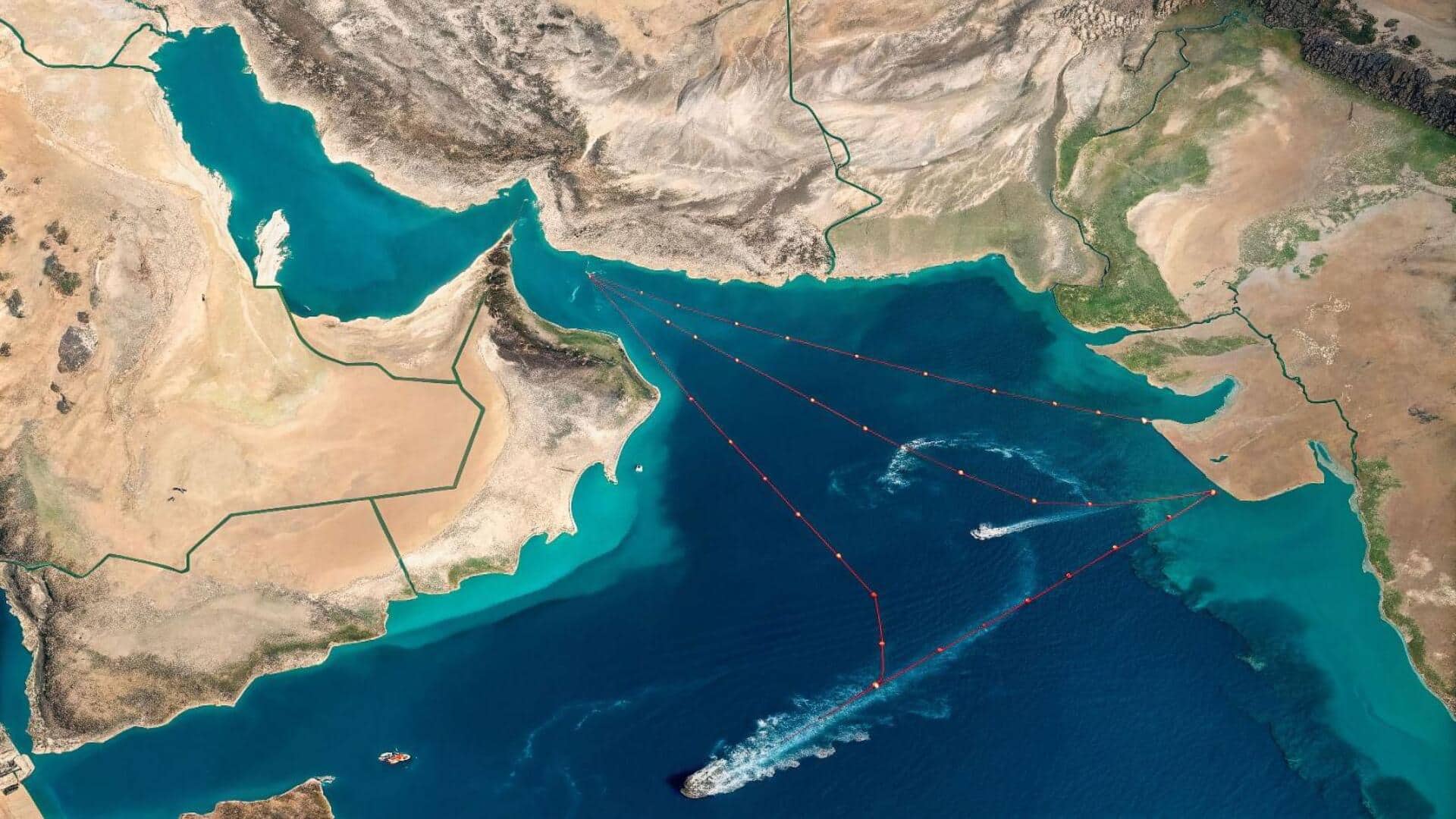
Hormuz is the only sea route to enter the Persian Gulf. On one side are Iran and on the other side are Oman and United Arab Emirates (UAE). It connects the Persian Gulf to the Gulf of Oman and the Arabian Sea in the Indian Ocean. This 39 kilometer long strait is 33 kilometers at its narrowest point and up to 95 kilometers wide. However, ships can pass through it only within a radius of 3 kilometers.
Why is the Strait of Hormuz important?
According to the US Energy Information Administration, about 20 percent of global oil consumption passes through the strait. It is said to be the world’s most important oil transit chokepoint. 21 million barrels of crude oil and 80 million tons of natural gas move through this strait every day. Currently, one-sixth of global oil production and one-third of the world’s liquefied natural gas (LNG) movement takes place from here. Due to its closure this supply will come to a halt.
What has Iran said about the Strait of Hormuz?
After the attack by Israel and America, Iran has announced the closure of the Strait of Hormuz on its part with immediate effect. However, it is not yet clear whether it is completely closed or not. This has increased global concern.
What will be the effect of closing the Strait of Hormuz?
If the strait is closed, the supply of oil and gas from countries like Saudi Arabia, Qatar, UAE, Iraq, Bahrain and Kuwait will be affected on a large scale. This will increase barrel prices in the global market and will also affect countries that do not import crude oil from Gulf countries. These countries may also have to face economic crisis. The biggest fear is that if the strait is closed, America will also suffer a big loss.
What will be the impact on India?
More than two-thirds of India’s oil imports (27 lakh barrels per day) and almost half of LPG imports pass through the Strait of Hormuz. India imports about 80 percent of its energy needs from other countries. Economic instability and inflation will increase due to supply disruption. There are fears that oil prices may cross $100-120 per barrel. This will increase import expenses and even items of daily use may become expensive.
What is India’s oil storage capacity?
The government has said the total storage capacity could last about 74 days, but research sources suggest that the effective stockpile may last only 20-25 days under the current circumstances. According to experts, the increase in fuel prices will also impact the transport, food and manufacturing sectors. Rising cost of imports will put pressure on foreign exchange reserves and softening of retail prices may also increase the subsidy burden.
Iran’s influence and associated risks
Iran has the world’s fourth largest proven oil reserves (170 billion barrels). Apart from its exports, its geopolitical importance is further enhanced by its geographical location. Iran can disrupt the Strait of Hormuz with its sea mines, fast attack ships, submarines, drones and missile systems. However, its closure will also harm its economy, its exports will stop and major buyers like China may move away from it.
background
Has the Strait of Hormuz ever been closed before?
During the Iran-Iraq War, both countries targeted each other’s commercial ships in this strait. This is also called tanker war. In 2019, four ships were targeted near the strait off the UAE’s Fujairah coast, which the US blamed on Iran. In 2010, a Japanese oil tanker was attacked by a group linked to al-Qaeda. However, this strait has never been completely closed.
 Follow Us On Google News
 Follow Us On WhatsApp

Leave a Comment