

What is news?
The situation has become stressed after the US attacked Iran’s 3 nuclear bases. After the attack, while the US has asked Iran to take the path of peace, Iran has vowed to retaliate by continuing its nuclear program. Under this, there is also a possibility of attacking American military bases located in West Asia. Let’s know where this hideout is and what will happen by attacking.
background
America attacked 3 locations including Fordo
On June 22, the US attacked 3 nuclear bases, including Fordo in Iran. These include Natanj and Isfahan. After the attack, US President Donald Trump said the three nuclear facilities were completely ruined by the attacks. Now Iran should establish peace. If he does not do so, then there will be more attacks on him. However, Iran has spoken of minor losses to nuclear facilities in this attack.
What has Iran threatened?
Iran’s Deputy Foreign Minister Majid Takht Rawanchi said, “Despite the attacks of America and Israel, Iran will continue its uranium enrichment activities. Nobody can tell us what we should do or what not.” He said, “The US has openly entered the war with Iran by openly violating Iran’s sovereignty. We assure that the warriors of Islam will bring regret and unexpected results to you with powerful and targeted campaigns.”
Iran also warned America in UNSC
Iran’s United Nations (UN) Ambassador Aamir Saeed Irawani said at the Emergency meeting of the United Nations Security Council (UNSC) on Sunday that “America has crossed a very large red line by attacking our nuclear facilities. Now Iran’s army will decide the time, nature and measure to respond to America.” He also clarified that now every American citizen or military personnel present in West Asia are being considered as the target.
Where are American military hideouts in West Asia?
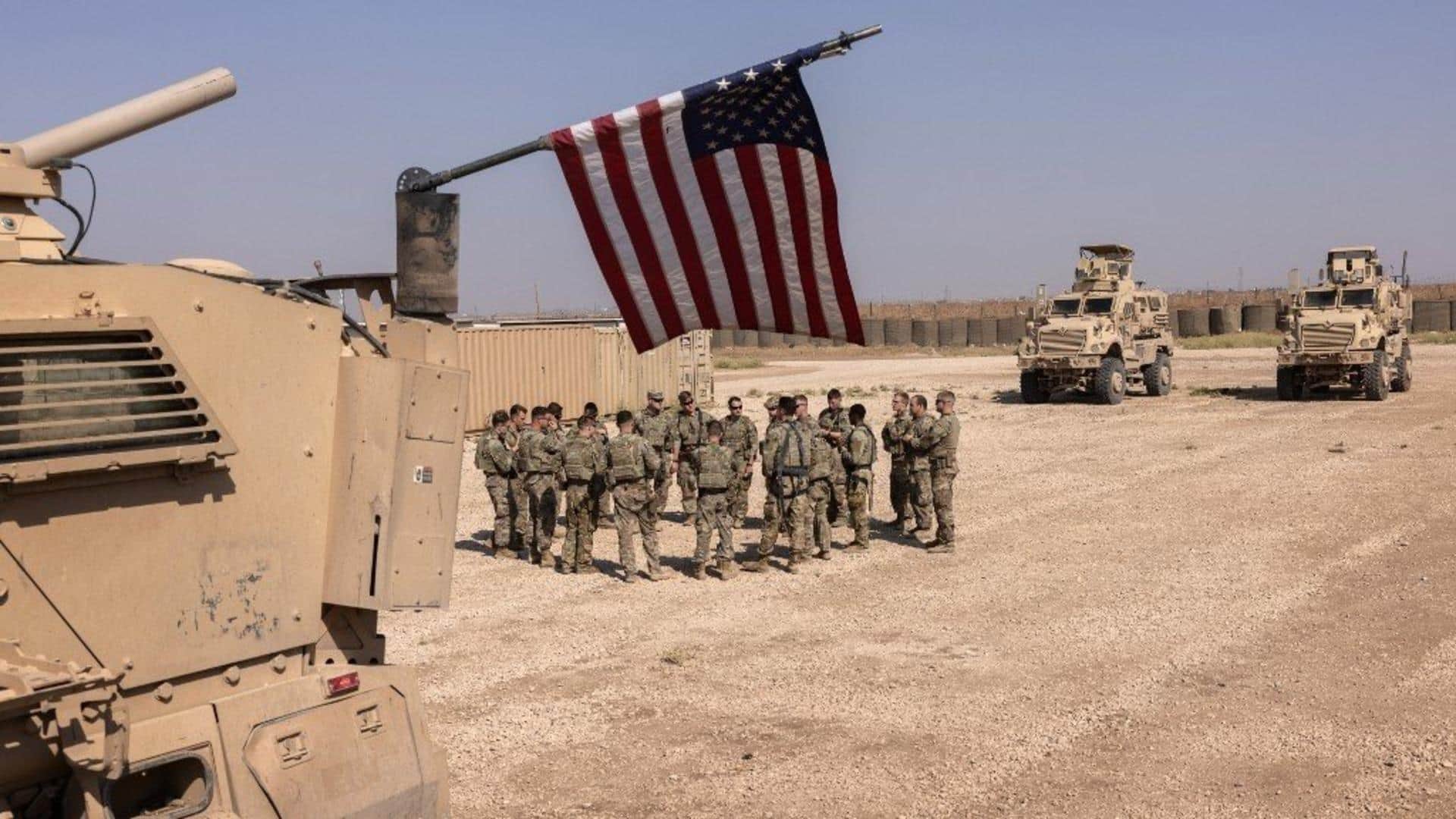
America has had a huge impact in West Asia for decades. Its 40,000 to 50,000 soldiers are deployed at 9 of its locations built in the region. These locations include Qatar, Kuwait, United Arab Emirates (UAE), Iraq, Syria, Saudi Arabia, Bahrain, Egypt and Jordan. Qatar is home to the US Central Command and Al Udid Air Base, the largest American military base in the region. The 379th Air Expeditionary Wing operates from this hideout.
American military hideouts are also operated in these places
Arifjan, Kuwait, also has a major military base of the US and Ali al -Salem Air Base, from where the 386th Air Expeditionary Wing works. The wing includes airlift, aerial refueling intelligence, surveillance and aeromedical nickel supplies with reconnaissance. Similarly, many US military bases operate in Iraq. These include Al-Herir and Al Assad Airport as well as several camps and outposts.
America’s 380th Air Expeditionary Wing is home UAE
The US operates Al-Dhafra airbase in UAE. It is home to the 380th Air Expeditionary Wing of America. Gulf Air Warfare Center is also on this airbase for air and missile defense training. Saudi Arabia has Prince Sultan Air Base, which is used by the US Air Force. American military personnel have also been kept in Eskan village near Riyadh. The US 5th fleet works from the US Navy Force Central Command Bahrain.
America operates Movafaq Salty Air Base in Jordan
Jordan has a US Muvaffaq Salty Air Base, which he operates with his colleagues. He also has many military hideouts in Egypt. In this way, America also has facilities in about 2 dozen countries in West Asia. There are many places that are close to Iran and can target them. The big thing is that Iran has taken such steps many times in the past.
What will be the results of attacking Iran’s American bases?
London -based Royal United Services Institute’s Senior Associate HA Helier NCB News Said, “Iran is trapped in a bad position. If he attacks American bases, the US will respond to an aggressive and continuous campaign. This can cause damage to the entire country including Iranian regime.” He said, “Iran’s non -retaliation will make it difficult for him to retract the solidarity of its rule, the public with his promises of dissatisfaction and resistance.”
Iran will be forced to think on its response
Jonathan Panicoff, who works at the Atlantic Council think-tank, said, “Even after anger against the US, Iran will attempt to adopt a calculating and narrow approach to its response at the end.” Similarly, Professor of International Relations at London School of Economics, Fawaz Garges, said that Iran would probably try not to drag in a full war with the US as it will cause great loss to the entire country.
 Follow Us On Google News
 Follow Us On WhatsApp

Leave a Comment